

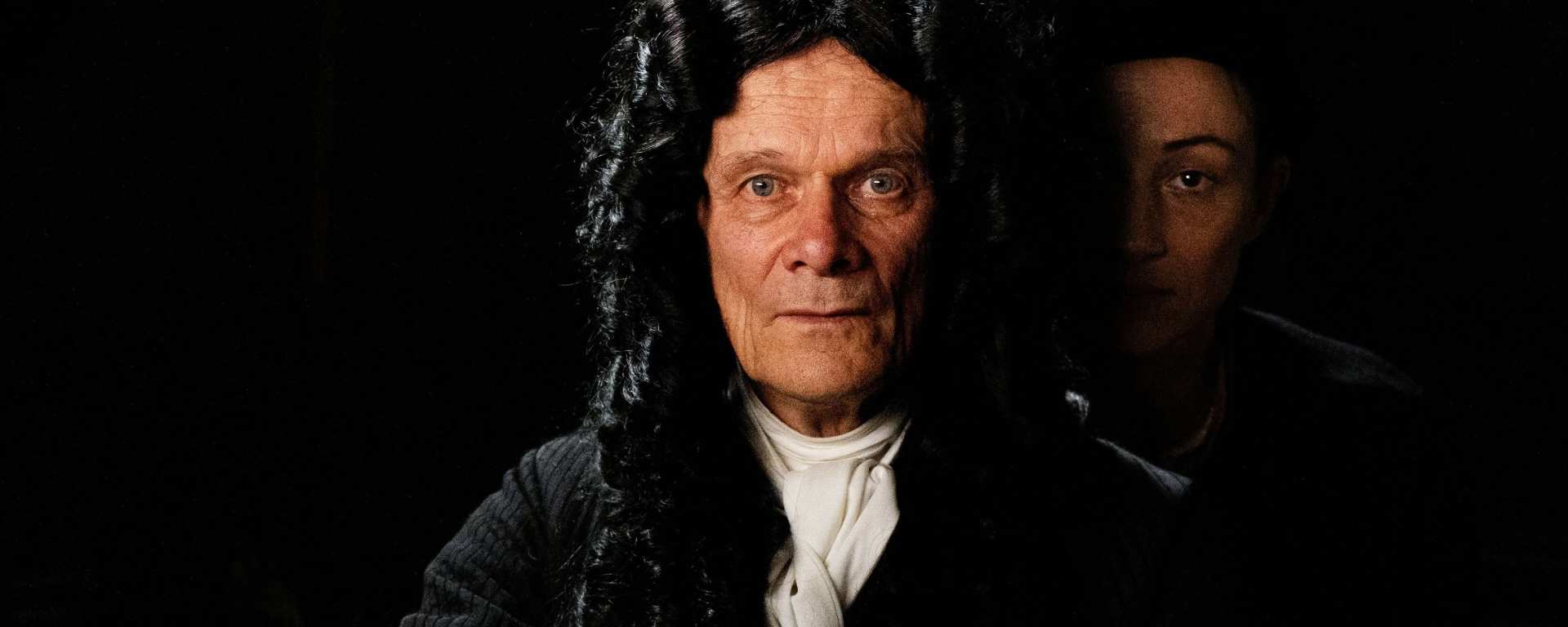
The 75th Berlin International Film Festival celebrated his last day awarding the prestigious Golden Bear to Dag Johan Haugerud’s “Dreams (Sex Love),” part of a norwegian trilogy by the same director. Drømmer – Dreams is a coming-of-age drama exploring the complexities of adolescent desire through the story of a 17-year-old’s infatuation with her French teacher. There was a strong competition that included Gabriel Mascaro’s dystopian “The Blue Trail” (Silver Bear Grand Jury Prize) and Huo Meng’s “Living the Land” (Silver Bear for Best Direction). I was not able to attend the festival, but through a fortunate arrangement, I had a chance to watch (online) a significant work from the program: Edgar Reitz’s “Leibniz – Chronicle of a Lost Painting”. And this offered its own profound rewards.
This is the latest opus from Edagr Reitz, director of “Heimat“, continuing his mastery of historical narrative and philosophical inquiry. Collaborating with co-director Anatol Schuster, Reitz crafts a mesmerizing exploration of art, truth, and intellectual pursuit in the Early Enlightenment period. The film centers on an intriguing historical premise: Queen Sophie Charlotte’s commission of a portrait of the philosopher Gottfried Wilhelm Leibniz, whose revolutionary ideas were reshaping European intellectual discourse. The narrative unfolds through a carefully constructed triangle of personalities: Leibniz himself, brilliantly portrayed by Edgar Selge, who brings a perfect balance of intellectual vigor and human vulnerability to the role; the French painter Pierre-Albert Delalandre (Lars Eidinger), whose pompous demeanor masks a deep insecurity about his artistic legitimacy; and the Flemish artist Aaltje van der Meer (Aenne Schwarz), whose quest for authentic representation challenges the established artistic conventions of the era.

Reitz’s film moves on multiple levels, each layer enriching the experience. On the surface, it presents a compelling period drama about artistic rivalry and philosophical discourse. On deeper examination it reveals a meditation on the nature of representation itself – both in art and in thought. The philosophical underpinnings of Leibniz’s work, particularly his concept of monads and his theory of pre-established harmony, find subtle expression in the film’s visual language and narrative structure. The cinematography, with its masterful use of chiaroscuro lighting, pays homage to both Baroque painting and German Expressionist cinema. Particularly striking is the film’s treatment of light as both a physical and metaphysical element. The camera obscura sequence, where van der Meer attempts to capture Leibniz’s essence, serves as a powerful metaphor for the relationship between perception and reality – a central concern in Leibniz’s philosophy. This sequence also exemplifies Reitz’s broader artistic strategy. The director draws parallels between the technological innovations of the early 18th century and the evolution of cinematic language, suggesting that both periods grappled with similar questions about the nature of representation and truth. The film’s careful period reconstruction extends beyond mere historical accuracy to create a space where past and present philosophical concerns intersect.
The performances deserve special attention. Eidinger’s Delalandre embodies the conflict between artistic convention and innovation. His portrayal suggests a man caught between his training in academic tradition and his growing awareness of its limitations. Schwarz’s van der Meer provides a compelling counterpoint, her character’s artistic journey reflecting broader philosophical questions about truth and appearance. Selge’s Leibniz emerges as more than just a historical figure; he becomes a lens through which the film examines the relationship between thought and representation. In the context of Reitz’s filmography, “Leibniz” represents both continuation and evolution. Like his monumental “Heimat” series, this film demonstrates his ability to use specific historical moments to explore universal themes. However, where “Heimat” examined German identity through the lens of ordinary lives, “Leibniz” takes a more explicitly philosophical approach, considering how ideas shape our understanding of reality. The film’s pacing might challenge viewers accustomed to more conventional historical dramas. Reitz allows scenes to unfold with deliberate slowness, creating space for contemplation. This approach mirrors Leibniz’s own methodical philosophical investigations and invites viewers to engage actively with the ideas being presented.
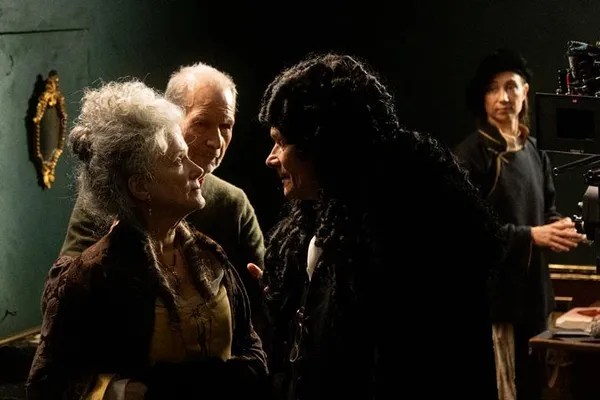
Particularly noteworthy is the film’s exploration of the tension between French and German intellectual traditions during the Enlightenment. Through the contrast between Delalandre’s formulaic approach and van der Meer’s more intuitive methods, Reitz subtly comments on the different ways knowledge and truth were pursued in this pivotal historical period. This cultural dialogue resonates with contemporary debates about methodology in both art and philosophy. The film’s technical achievements extend beyond its visual elements. The sound design creates a rich atmospheric texture that enhances the period setting while avoiding mere historical recreation. The score, sparse but effective, emphasizes key philosophical moments without overwhelming them. With “Leibniz – Chronicle of a Lost Painting”, Reitz demonstrates that philosophical depth and cinematic artistry can coexist harmoniously, standing as one of the most intellectually stimulating works in recent cinema. It reminds us that the questions posed by Enlightenment thinkers like Leibniz remain relevant today. How do we represent truth? What is the relationship between art and knowledge? Can we truly capture the essence of a person or an idea? Through its exploration of these themes, Reitz’s film becomes more than a historical drama – it becomes a meditation on the very nature of human understanding and artistic expression.

 Cinema non risolto