

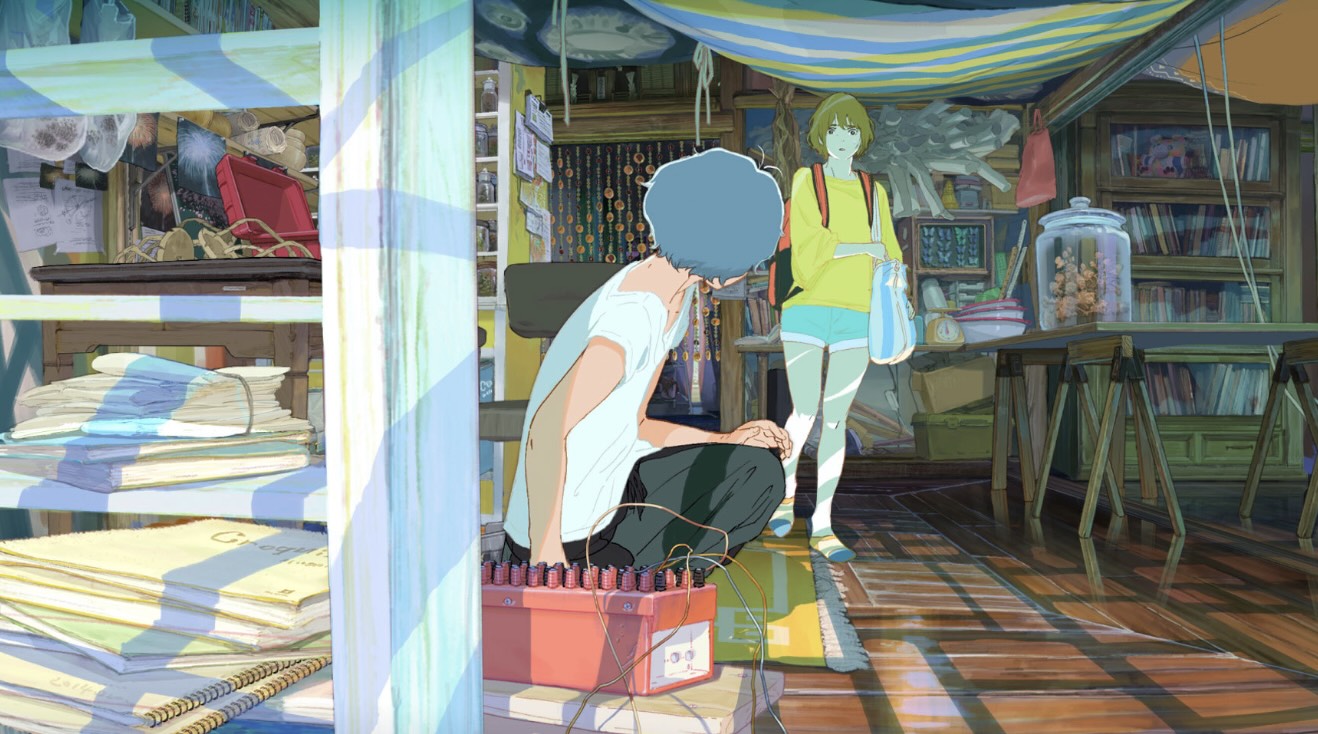
Although formally Yoshitoshi Shinomiya’s first feature, A New Dawn doesn’t look like a debut feature. The film shares some of the atmospheric poetics associated with Makoto Shinkai, where Shinomiya previously worked as an artist on The Garden of Words (2013) and Your Name (2016), yet it deliberately steps away from that tradition’s polished emotional directness, favouring hesitation, silence and perceptual drift over narrative hooks or immaculate visual clarity.
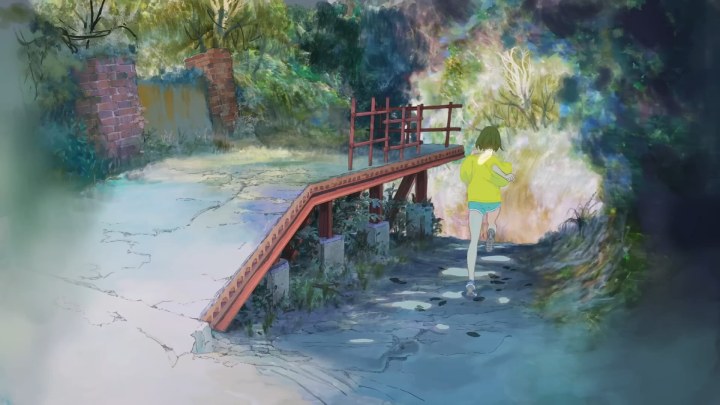
Selected in competition at the Berlin International Film Festival – a rare placement for an animated debut – the film also emerges from a transnational production context, co-produced between Japan and France (Miyu Productions and Asmik Ace) and handled internationally by the Paris-based sales company Charades, positioning it less as a discovery than as a carefully situated festival work. A New Dawn will open in Japanese theatres on March 6, 2026.
It takes place in a village that hasn’t quite vanished, yet no longer works as a place to go to. The Obinata firework factory is due to shut the next day, though in practice it has been closing for years. Keitaro still produces fireworks by himself – not exactly to preserve anything, and not even out of attachment, but because stopping would force time to rearrange itself around his life. His father’s absence never becomes a mystery to solve; it settles into the background as a normal condition. What he maintains is less a memory than a framework in which memories once had meaning. Throughout the film there is a quiet tension between remembering and keeping something running. Keitaro doesn’t recall the past so much as keep it operational. As long as the same gestures continue, the father is not entirely gone, held in a kind of extended present produced by repetition rather than recollection. Mourning, the film suggests, only truly begins when these mechanisms are allowed to fail. The final launch therefore becomes the moment he finally allows time to move again.
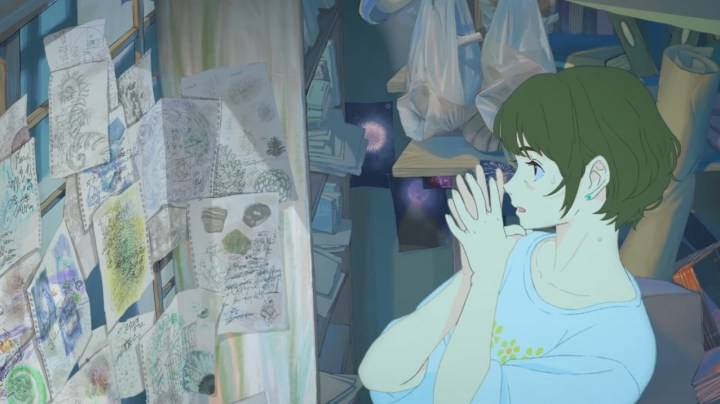
A New Dawn lingers on the point where continuity stops feeling natural and starts to look like work. The factory once carried a rhythm (people working together, waiting together, watching together) and once the audience disappears the fireworks shift in meaning. They’re still made with care, but now they’re performed without anyone to receive them, a ritual continuing after its social function has faded. The film doesn’t stage this as conflict or protest and lets the setting quietly drain the gesture of purpose. A place built for gathering becomes a place you pass through. Keitaro’s friendships operate on the same suspended frequency: their conversations keep the tone of adolescence, they follow the same routes, repeat small habits, even as the world around them stops accommodating those patterns. It’s more concerned with how hard it is to adjust your place in time, without being overly nostalgic. The main characters are living inside coordinates that no longer exist anywhere but memory, and getting older means recognizing that certain spatial relationships can’t survive once the infrastructure around them changes.
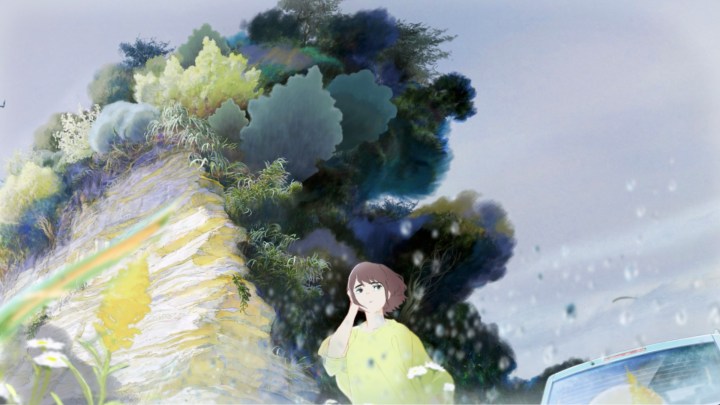
Waiting occupies more space than doing, and preparation becomes the real event. Mixing powders, adjusting fragments, testing proportions – these gestures accumulate duration rather than progress, as if the only way to register an ending were to stretch the process that leads to it. When the firework finally ignites, it feels almost secondary, the visible point of something long underway. This sensation deepens as interior and exterior spaces begin to resemble each other. Dust suspended inside the workshop echoes the haze covering the landscape outside, and the boundary between workplace and environment slowly loses definition. The factory no longer appears as an isolated structure and starts reading like a body already dispersing into its surroundings, absorbed by the terrain before any physical removal occurs. The legendary “Shuhari” firework shifts accordingly: at first a message left by the missing father, eventually an image whose function is simply to conclude. Fireworks already obey a cinematic logic (extended preparation, brief appearance, survival only in memory) and the film leans into it until the final launch plays like a projection arranged for closure. Keitaro doesn’t recover the past through the image but installs something in its place, allowing the past to fall silent.
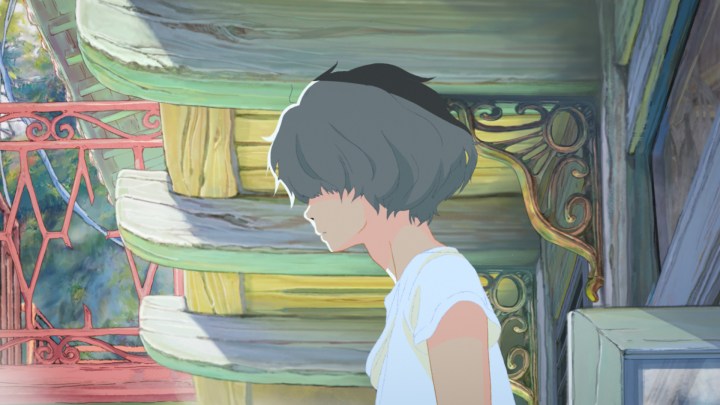
Shinomiya’s images inhabit a soft register where even the air seems to hold weight. Rather than foreground longing through polished visual intensity, the film lingers in moments in which perception feels unsettled, where smoke softens contours, light spreads across surfaces, and gestures pause before taking shape, so that significance gathers gradually through the layering of quiet details. Change arrives as a slow modulation within the frame, emerging through faint atmospheric shifts and subtle adjustments in bodies and space, as if transformation were sensed before it could be articulated, unfolding in the delicate interval between what the eye registers and what the mind begins to grasp. The morning evoked by the title arrives quietly, leaving the past where it stands, no longer sustained by repetition.

 Cinema non risolto