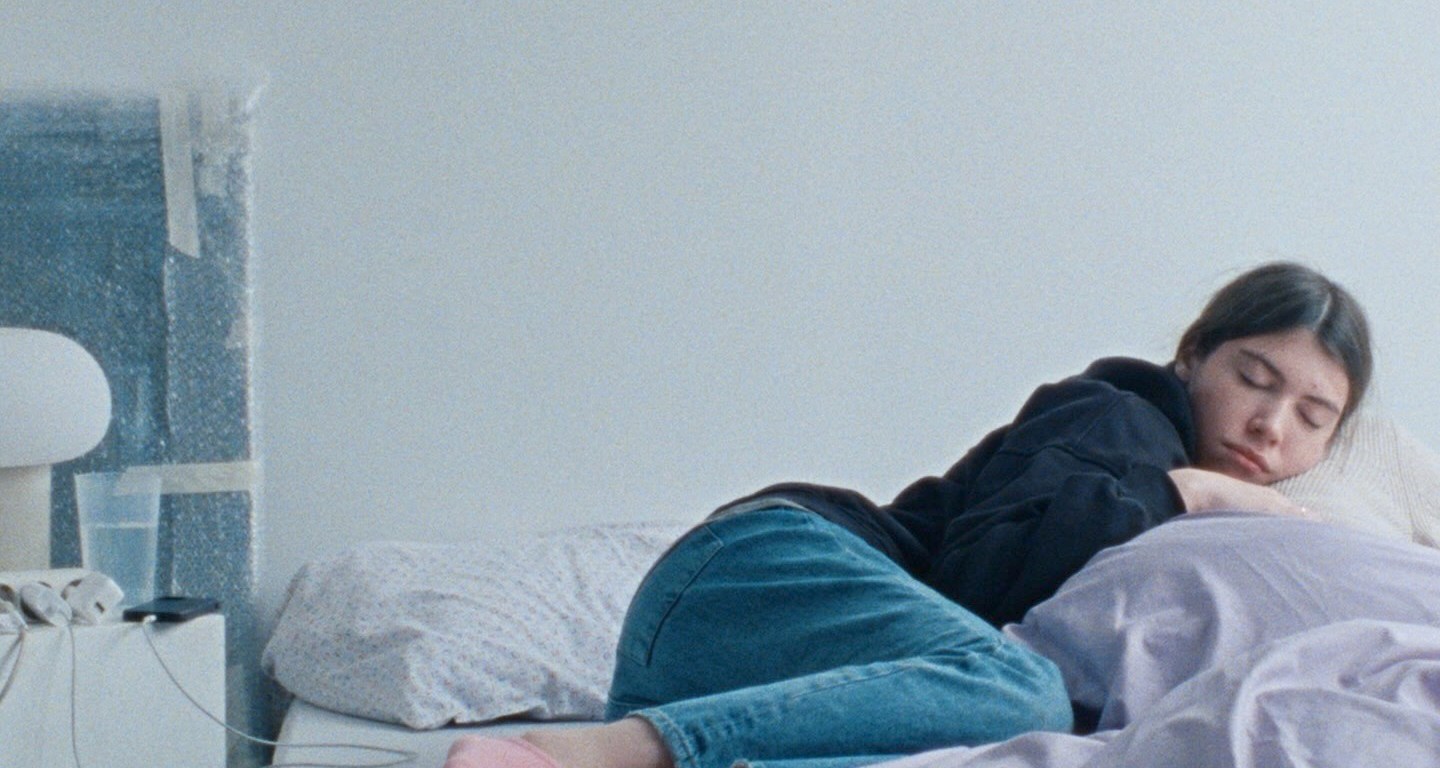
Presented at festivals including the Viennale, bluish is a 2024 Austrian film directed by Milena Czernovsky and Lilith Kraxner, at their second feature film. Set in Vienna and centered around two young women (Errol and Sasha) drifting through daily routines, fragmented conversations, online spaces and periods of isolation. With convincing acting from Leonie Bramberger and Natasha Goncharova, the film slowly shapes its own quiet rhythm without relying on conventional drama or emotional release. Its minimalist structure and extremely restrained pacing will probably divide audiences, though the precision behind its choices gives the film a strangely immersive quality that stays with you long after it ends. There’s something quietly absorbing about bluish, the kind of film that seems almost weightless while you’re watching it but then stays inside you.
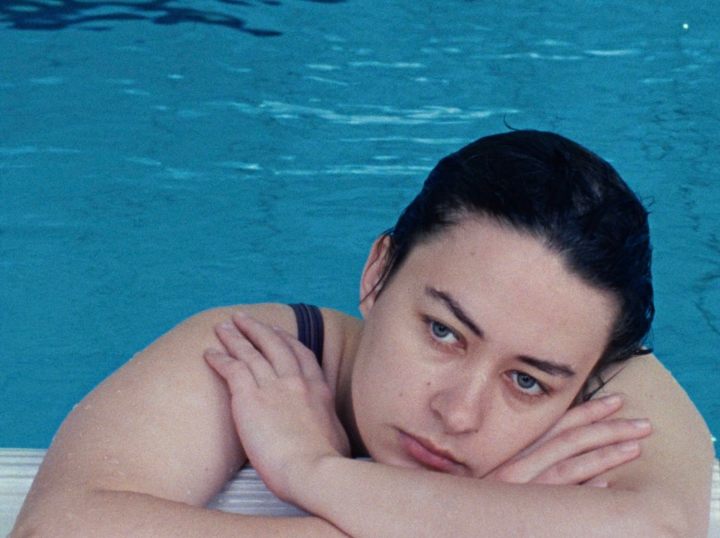
Kraxner and Czernovsky build the film around fragments of everyday life, following two young women as they move through apartments, pools, public transportation, empty interiors, phone screens, unfinished conversations, and stretches of silence that slowly reveal more than the dialogue itself. Very little actually “happens” in a traditional sense, yet the film gradually creates a strong sense of emotional presence simply through accumulation, repetition, and observation. What makes Bluish especially compelling is how controlled everything feels beneath its apparent simplicity. The 4:3 framing and the 16mm photography could have easily become empty aesthetic choices in another film, especially within contemporary arthouse cinema where those formats are often used almost automatically to signal intimacy or seriousness. Here they genuinely shape the emotional experience of the film. The narrow frame keeps the characters constantly enclosed within rooms, hallways, train windows, and corners of domestic spaces, while the grain of the image softens surfaces and gives the city a faded, slightly unstable texture. Vienna rarely feels vibrant or fully alive. Instead, it exists in this muted, emotionally cooled-down state that perfectly matches the characters themselves. Blue tones drift through the film until they stop functioning as a visual motif and start feeling more like a permanent emotional condition. Even the sound design follows that same philosophy of restraint, with very little manipulation in the way scenes are constructed. Background noise, distant voices and moments of near silence quietly blend together until the film starts feeling almost tactile in the way it captures space and duration.
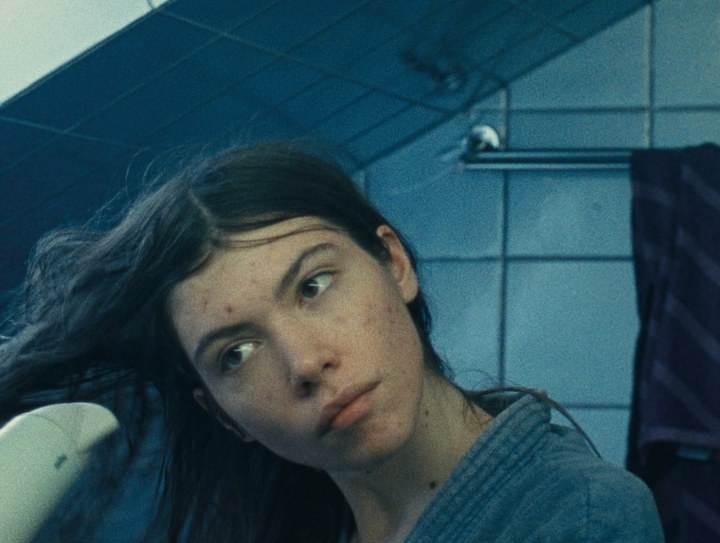
The pacing is extremely slow, though it never feels uncertain about itself. From the beginning, the film understands exactly the kind of rhythm it wants to maintain and commits to it completely. Scenes are allowed to breathe for long periods of time, sometimes lingering on empty spaces or small gestures long enough for tiny details to gain unexpected emotional significance. Watching bluish feels more like slowly adjusting to a particular state of mind, to a frequency. It has very little interest in dramatic revelations or clear turning points. The inner lives of Errol and Sasha are never translated into easy psychological explanations or expositional dialogue, yet the film creates a genuine curiosity around them precisely because of that distance. It captures the strange experience of spending time around people without ever fully understanding them, leaving the characters emotionally open. There are moments that recall Chantal Akerman, especially in the way repetition, duration, and domestic spaces become central to the emotional structure of the film. At the same time, bluish feels deeply connected to a contemporary form of alienation shaped by digital routines, passive scrolling, online classes, disconnected social interactions, and the constant presence of technology inside everyday life. The film never overexplains these ideas or turns them into direct statements, which ultimately becomes one of its strongest qualities. Kraxner and Czernovsky seem far more interested in preserving uncertainty than resolving it.

What stayed with me most was the feeling that these characters continue existing somewhere beyond the frame, carrying on with their routines and emotional ambiguities after the film quietly leaves them behind. It’s a film that offers very little in terms of conventional narrative payoff, but it leaves behind a desire to remain inside its world a little longer, observing those characters and understanding something that always feels slightly out of reach. That unresolved quality ends up becoming the film’s strongest and most memorable aspect.


