

Presented in the Un Certain Regard section at the 2026 Cannes Film Festival, Titanic Ocean is a Japanese-language film set in a mermaid performance academy, a premise that already feels like something more often described than truly inhabited on screen. From Greek director Konstantina Kotzamani, the film treats its material with a quiet emotional focus that gradually changes how each scene is read, shifting it away from any idea of conceptual novelty toward something more unstable and immersive. The setting remains unusual throughout, but it doesn’t feel artificial, instead it carries a tangible emotional weight that stays grounded beneath the surface. The academy is a closed space where identity starts to feel fragile, and even the smallest gesture can slip into performance before it has time to become something properly felt.
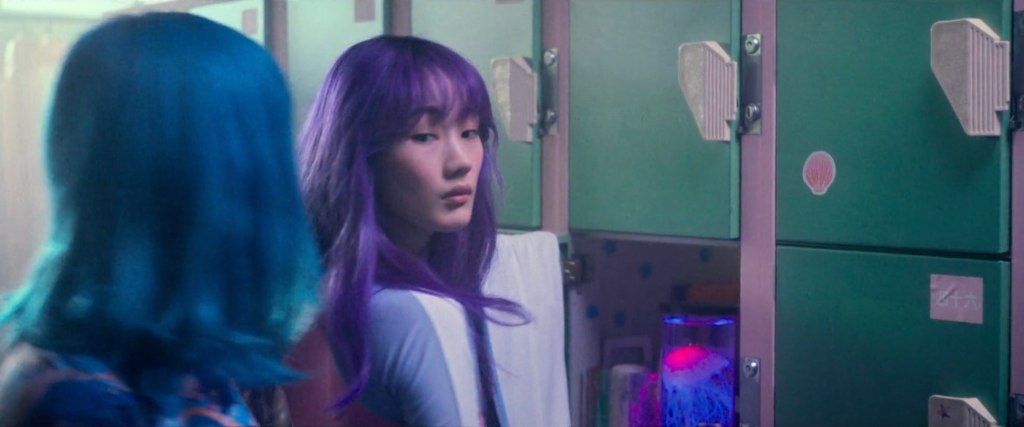
A boarding school trains teenage girls to become professional mermaids for aquatic shows. Seventeen-year-old Akame undergoes strict breath control and choreographed performances, her identity increasingly shaped and constrained by the demands of spectacle. In this controlled world, performance and self begin to blur as an inner siren voice emerges, unsettling the boundary between training and transformation. As first love unfolds inside the enclosed academy, intimacy and performance mix with it, and Akame’s path of growth and change becomes harder to reverse. What she is becoming is no longer something she can step in and out of, but a deeper psychological and bodily shift, where becoming a mermaid stops feeling like something she does and starts feeling like something she is.

The film’s greatest strength is probably the fact that it never loses control of its own emotional language. There are plenty of recent festival films built around dreamlike atmospheres that eventually drift into vagueness because the directors confuse ambiguity with depth. Titanic Ocean avoids that problem almost entirely. Even during its more surreal moments, the emotional logic remains intact. Characters react according to emotional instinct rather than screenplay symbolism, and that consistency allows the film to maintain credibility all the way through. It generates a peculiar feeling while watching it, almost as if the film were floating slightly outside reality without ever disconnecting from recognisable emotional behavior. Kotzamani’s direction is what structures this level of control, shaping performance through framing, rhythm, and duration rather than through overt emotional signposting. Within this system, Arisa Sasaki’s central role as Akame (or Deep Sea) doesn’t reveal itself right away. The main character often observes as if watching herself from a slight distance, testing what still feels authentic in actions that have become almost automatic through repetition. Kotzamani’s camera stays with this instability without trying to resolve it, lingering on small shifts in posture, slight reactions, and moments where the body seems to break its own continuity.
Inside the academy, individuality is constantly encouraged and erased at the same time. The girls are expected to distinguish themselves while remaining visually interchangeable inside the spectacle they collectively create. There’s a constant sense that these characters can barely hear themselves think under the pressure of expectation, competition, and loneliness. Deep Sea’s emotional arc works because it doesn’t turn self-discovery into something neat or comforting. She keeps descending, emotionally and literally, trying to reach something beneath the identities she performs for others, without turning the process into clear breakthroughs or easily readable reactions. The underwater imagery obviously carries metaphorical weight, though the film handles it with enough restraint that it never starts feeling schematic. Water becomes a place where speech disappears and bodies move differently, where identity itself loses stable definition. Some of the strongest scenes in the film happen precisely in these submerged spaces, where the physical awkwardness of movement says more about the characters than dialogue could.
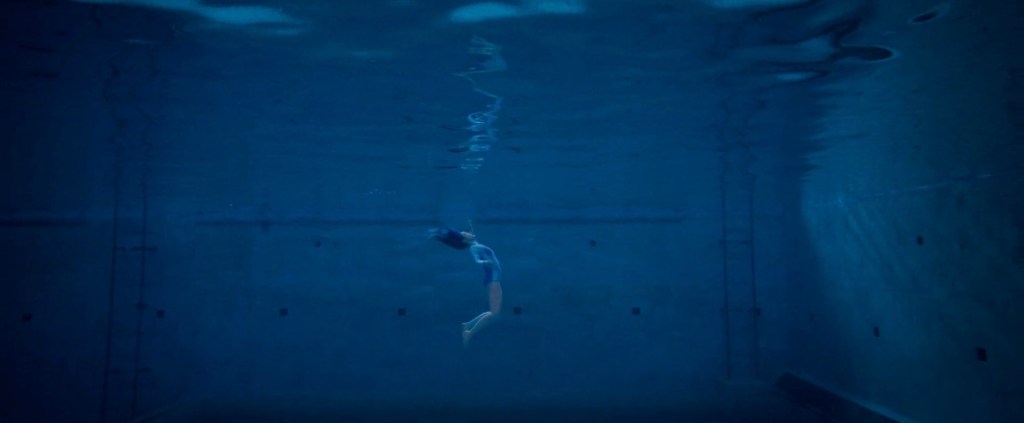
The use of the song I Follow Rivers arrives at a precise point, when Deep Sea starts to feel herself from within rather than through how she is seen. The repetition of her name inside the song makes the sequence more intimate, as if she briefly hears her own voice reflected back. Kotzamani keeps the scene controlled and the shift comes quietly, almost indirectly.
I, I follow
I follow you, deep sea, baby
I follow you
If I have a subtle hesitation about the film, it concerns the editing and its overall length. There is enough emotional material to justify a slower pace, but certain scenes remain onscreen slightly beyond the point where they continue accumulating meaning, and the emotional momentum occasionally flattens because of it. I feel that a sharper cut (somewhere around 115 minutes) would strengthen the film without sacrificing its atmosphere.
Titanic Ocean feels sincere and emotionally grounded, never turning its unusual premise into a showcase of stylistic display, even when the material could easily move in that direction. Even when the world becomes stylised or dreamlike, it keeps a clear emotional logic that carries through its more abstract moments without slipping into self-awareness. That coherence runs through the film from start to finish, supported by a tightly controlled atmosphere and a central performance that keeps the psychological focus intact. We follow Deep Sea through to the end, as “I Follow Rivers” gathers the journey into a single line of pursuit, carrying her toward a point where she finally meets something like herself without needing to explain it.

 cinemanonrisolto.com